A good video can lose viewers even when the footage itself is strong.
The problem is often the edit.
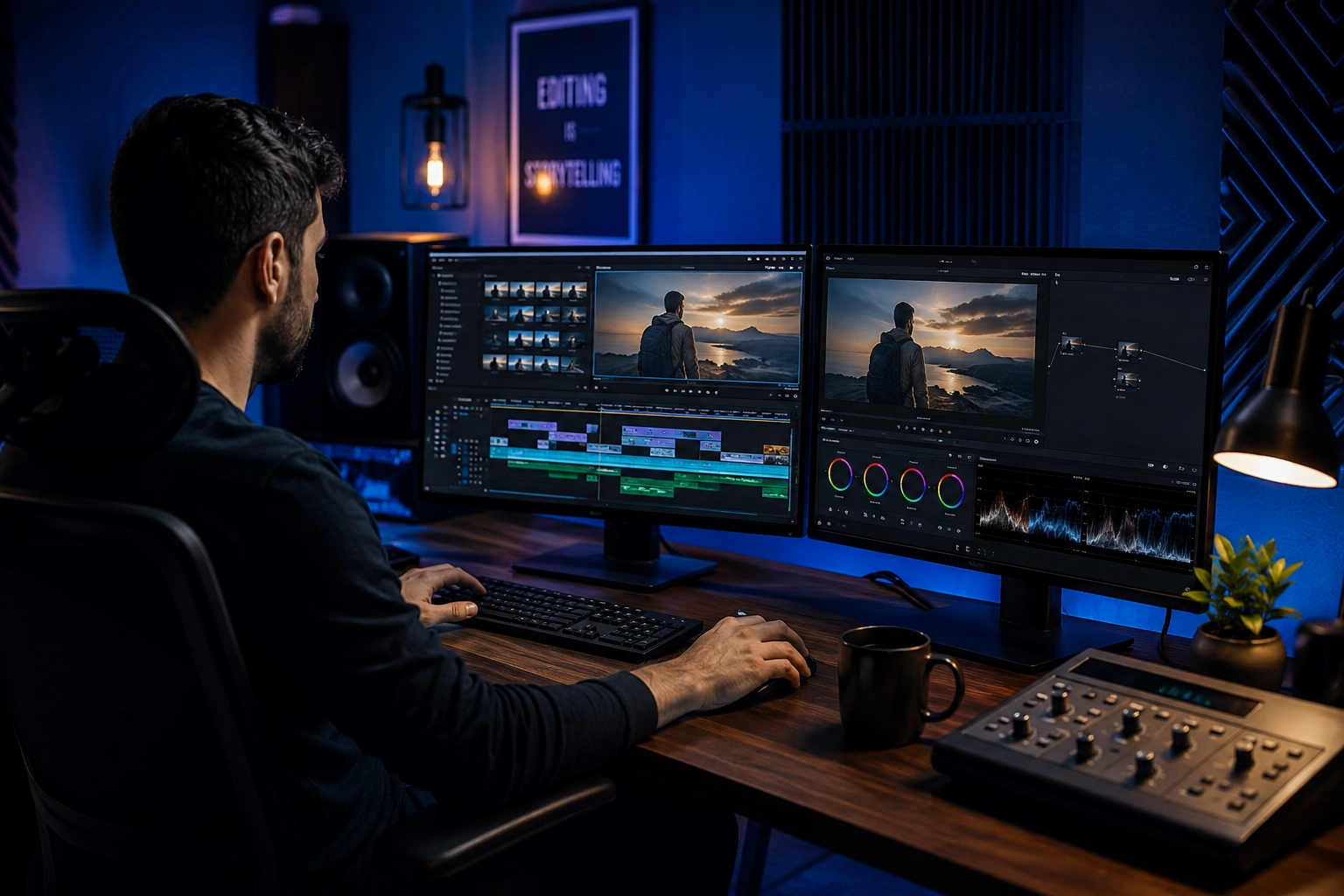
Professional video editing shapes raw footage into a clear viewing experience. Every cut, transition, sound effect, graphic, and visual change has a purpose.
When the editing works, viewers stay focused on the story instead of thinking about the editing itself.
Start With the Story
Before adding effects, you need a clear structure.
Your footage should move the viewer from one idea to the next without confusion.
A strong edit usually answers three questions:
What is happening?
Why does it matter?
What should the viewer see or hear next?
This applies to vlogs, YouTube videos, finance content, gaming videos, and branded content.
The editing style may change, but the need for clear storytelling remains the same.
Pacing Controls Attention
Pacing determines how quickly information reaches the viewer.
Long pauses can work when they create anticipation or give an important moment room to breathe. Unnecessary pauses can make a video feel slow.
Fast cuts can create energy, especially in gaming and social media content. Too many cuts can make the video difficult to follow.
Professional editing finds the right rhythm for the content.
The goal is not to make every second fast.
The goal is to make every second purposeful.
Remove What Does Not Add Value
One of the most important editing decisions is knowing what to remove.
Raw footage often contains:
Repeated statements
Long pauses
Unnecessary reactions
Mistakes
Dead space
Information that does not move the story forward
Removing these elements improves clarity and keeps the viewer moving through the video.
Good editing often comes from subtraction.
Use B Roll With Purpose
B roll gives you another visual layer while the main story continues.
For example, a finance creator might discuss a company while showing relevant charts, products, offices, or market visuals.
A travel creator might explain an experience while showing locations, people, food, or environmental details.
B roll should support the narration.
It should not exist simply because the screen needs something to show.
Sound Design Matters
Viewers notice poor audio quickly.
Clear dialogue should remain the priority. Music, ambient sound, transitions, and sound effects should support the scene without competing with the voice.
Small sound details can make an edit feel more polished.
A door closing, keyboard sound, camera shutter, environmental ambience, or subtle transition effect can add realism when used appropriately.
Sound design helps create continuity between different shots.
Graphics Should Explain
Graphics can make complex information easier to understand.
This is especially useful for finance, educational, documentary, and YouTube content.
Useful graphics include:
Charts
Labels
Captions
Callouts
Animated statistics
Simple diagrams
The best graphics communicate information quickly.
If an animation takes attention away from the message, it needs to be simplified.
Color Creates Consistency
Color grading gives footage a consistent visual appearance.
Different cameras and lighting conditions can produce different colors. A good grade helps bring those shots together.
Color can also influence the feeling of a scene.
A clean, natural grade may suit a vlog.
A darker cinematic treatment may suit a documentary.
A stronger contrast and stylized palette may work for branded content.
The grade should support the content and brand rather than overpower it.
Every Cut Should Have a Reason
A professional edit does not require complicated transitions.
A simple cut is often the best choice.
You might cut because:
The speaker finished a thought.
The camera angle needs to change.
The story is moving to another location.
A new piece of information is being introduced.
The visual needs to match the narration.
When every cut has a reason, the video feels intentional.
Editing Different Types of Content
Different creators need different editing approaches.
IRL vlog editing usually focuses on story structure, pacing, natural sound, color, and captions.
Finance video editing often needs graphics, charts, captions, visual explanations, and clean pacing.
Gaming video editing can require faster pacing, reactions, sound effects, captions, and visual effects.
The editing process should begin with the purpose of the video.
There is no single editing style that works for every creator.
The Goal Is a Better Viewing Experience
Professional editing should make the content easier to watch.
It should help the viewer understand the message, follow the story, and stay engaged.
That requires more than technical editing skills.
It requires judgment.
You need to know when to cut, when to hold a shot, when to add a graphic, when to use sound, and when to leave the frame alone.
That is what turns raw footage into finished content.
Final Thoughts
Strong video editing is built around decisions.
The best edit does not necessarily contain the most effects or the fastest cuts.
It creates a clear story, maintains the right pace, supports the message, and gives viewers a reason to keep watching.
Whether you create IRL vlogs, finance videos, gaming content, or branded videos, thoughtful editing can significantly improve the final result.
FaseehFilms helps creators turn raw footage into polished, engaging videos built around their content and audience.
Call to action:
Need your footage turned into a polished video?
Explore the FaseehFilms editing services or get in touch to discuss your next project.